Monday, May 2, 2011

Blog#12 What surprised you from the worm's dissection?

Blog#12 What surprised you from the worm's dissection?
What surprised me in the worm dissection was not only one thing but plenty of things.

At the first place, I didn't there were some worms that were as long as the ones we dissected in class that were at the same time really skinny. It was longer than my whole hand, but also skinner than one of my fingers.

The second thing I was surprised was that it was so simple to dissect a worm; we just needed to use a simple blade, and there the skin opened and we saw the organs inside the worm while putting pins to keep the worm in place.

Another thing was that inside the worm, there was huge amounts of dirt. From top to bottom was full of dirt and it seemed like nothing else. Well, it was from the clitellum to like the annus part of the worm. Sometimes I wonder if all worms eat are DIRT, DIRT, DIRT, and nothing else to fill up their stomach.

I was also surprised that worms have FIVE HEARTS! Because they have five hearts, I wonder if they have five lives like a cat supposedly have nine lives. Well, it must be false that the worm has five lives because the worm should have survived after we dissected it and since it didn't that might be a safer thing because I know worms won't run around the classroom or school.

Blog #11 Get a picture of alternation of generations put it in your blog and explain how it relates to plants

Blog #11 Get a picture of alternation of generations put it in your blog and explain how it relates to plants


This is the alternation of generations- of ferns obviously.
The alternation of generations refers to the occurrence in the plant life cycle of both a multicellular diploid organism and a multicellular haploid organism. For example, ferns can be part of an alternation of generations because this plant life cycle is either or both the diploid plant or the haploid plant. The process will be from meiosis to mitosis as shown in the digram but in between, fetilization will occur or take place.
 
First of all, the large leafy plant is the diploid organism; these diploid have to undergo a process which is meiosis to create haploid cells, which is seen- the other plant. Therefore, these cells will not adapt quickly to form diploid cells that fast. Instead, they are shedded like spores and germinate into small haploid organisms. Since the diploid cells create spores, it is called as the sporophyte generation of their life cycle. Over some time of maturity, the haploid organism will create haploid gametes or could be called as the gametophyte generation of their life cycle. The male gametes will then be released and swim to the female egg; then it will be completed as the full or completed life cycle.
 

Saturday, April 16, 2011

Blog #10 Why is dissection an important part of a biology curriculum? Which animals and/or plants should be included in biological studies?

Blog #10 Why is dissection an important part of a biology curriculum? Which animals and/or plants should be included in biological studies?

Anatomization is another word for dissection; thus, dissection is the process of disassebling and observing something to determine its internal structure and it helps as an aid to discerning the functions and relationships of its components. Dissection is an important part of a biology curriculum because it is a sort of model for humans to use it on. For example, mice or rats are used for experiments to determine if something could work on the rats in order to work for humans.

A rat could be tested on something before used on humans. Such as a type of medicine or surgery to make sure it is used safety to be performed on humans. Even though dissection may look unpleasant and nasty, that is one way to experiment what does and doesn't work for humans.

In the short story- Flowers for Algeron, it is first tested on the rat Algernon to make sure if it works on a human. The surgery was to be make a person/animal smarter by doing the surgery on their brain. After experimenting it, it really worked on the rat; therefore, they started surgery on the person to make him smarter. A few weeks later, he was really really smart but then the rat had some problems. Later on, the rat died! To see what happened during the experiment and not continue with this type of surgery, the scientists had to cut the rat open to see why it died and didn't stay alive.

Some other animals such as frog are dissected at school in the course Biology to show students how it is inside a body like the tissue or the stomach, etc. Maybe some other animals can be use in dissection can be birds or even worms. However, I also don't think birds would work because their habitat is different from ours and humans don't have wings.

Monday, April 11, 2011

Blog #9 Define the different forms of community interaction: competition, commensalism, mutualism, predation, parasitism Give an example and a picture for each

Blog #9 Define the different forms of community interaction: competition, commensalism, mutualism, predation, parasitism Give an example and a picture for each 


Parasitism is a type of symbolic relationship between two species of plants or animals in which one benefits at the expense of the other and even sometimes, without killing it. In addition, one organism lives on or inside another organism and harms it. The host from the parasite that gets all or part of its nutrientional needs from the other organisms.An example of parasitism is a tick feeds ont he blood of its host and may carry certain diseases that might cause microoraganims to appear.

Predation is an interaction in which one organism captures and feeds on another organism. The predator is an organism that does all the killing and eating work. The prey is a food organism. Like in the picture, lions are fierce animals and they are strong; therefore, you can see that they are even eating an ox for food. Even cheetahs aren't animals to hunt for lions, instead, it is vice versa where cheetahs hunt for lions because cheetahs are fast and they have sharp teeth and claws to catch animals easier. Their powerful legs also causes them to run faster after their prey or enemy.

Mutualism causes both species to benefit from the relantionship. The biggest example is flowers. As shown in the picture, a bee pollunates the flower causing the flower to sprout and look beautiful; thus both species are happy of the ending. The flowers also provides the bee nectar as a source or food or pollen and the bee helps the flower to reproduce.

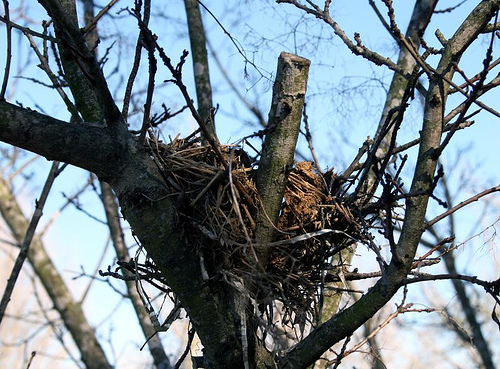
In commensalism, one member of the association benefits and the other is neither helped no harmed. For instance, barnacles are small marine animals that often attach themselves to the whale's skin. Whales are not harmed from barnacles when they are sticked  onto the whale's skin and yet the barnacles benefit from the whale's constant moving in the ocean. Another example is that if a bird makes a nest on a tree, the tree does not get affected in any way and yet the birds benefit from the tree by having a place to set their shelter on which is their nest.

Last of all, competition occurs everywhere. To be specific, competitions take place when organisms of the same or different species attempt to use an ecological resource in the same place at the same time. Resource is defined as to any neccessar of life such as water, nutrients, light, food, or space. An example would be that birds that are stronger would be able to fight for food better especially in the sky like an eagle catching a jay bird. The eagle would win; therefore, also getting food to eat and fill up its stomach.

Thursday, March 24, 2011

Blog 8 Your choice talk about something you learned or ask a question about something that is confusing you

Blog #8 Your choice talk about something you learned or ask a question about something that is confusing you

My choice for today's topic will be evolution, my opinions about it. Even though I understand what humans came from and what they evolved from, it seems to confuse me how everything else started. For example, how did it occur for humans to grow brains and rule this world. Why are humans so powerful in this world? Why do we get to go to school? What is the point of everything when all living things-humans are going to die someday?
Additionally, how come elder generations of species didn't decide to invent stuff such as the "lightbulb" like Albert Einstein? If a human is a type of species or an animal, then how come we don't die as easily? For instance, if a dog kills a human, then the dog will be sent to death; aren't humans considered as animals too or is it just because we have total control of this Earth? How come humans get rights or can fight for their rights and if dogs want too, they cannot do what we can do exactly? Why can't humans live a simple life too like what pandas are, just wanting to eat and sleep? If the answer is like no because no humans will do any job for making us food. To be more specific, if no one was working, no one will be processing our food to eat, but how did species long ago survived? They depended on each other for survival (survival of the fittest), maybe that is the reason for the human population growing and not decreasing. This concludes my topic for today:evolution and think about all the questions I posted.

Saturday, March 19, 2011

Blog #7 Compare and contrast two biomes describe them in detail include pictures of plants and animals you are liklely to see

Blog #7 Compare and contrast two biomes describe them in detail include pictures of plants and animals you are liklely to see

The two biomes that I will describe, compare, and contrast are the tropical rain forest and the tropical savanna.

The tropical rain forest are habitats to many animals or species. Rainforests contain lots of tall trees in a region of year round warmth. Rain falls 50 to 260 at average, inches a year; therefore, it is a wet climate group where it only covers 6% of Earth's land in the world but it gives us 40% of Earth's oxygen so don't you think we need more tropical rainforests since this world is producing more and more people. Every year it is humid because of all the rainfall; a tropical rainforest gets about 150 centimeter of rain every year. The rain comes from all the hot and wet weather. The hotter the air is, the more water vapor it can hold; therefore, causing a lot of rain. The climate is near the equator meaning that their is more direct sunlight hitting the land and sea causing the water to evaporate into the air and the warm air can hold lots and lots of water vapor.
Scientists estimated that more than half of the animals and plants in the world lives in these forests; it is their habitat. Above the forest floor, there forms a dense covering called a canopy; additionally in the seond layer of shorter trees and vines forms an understory. The organic matter that falles to the canopy decomposes quickly and the nutrients are recycled. Abiotic factors of a tropical rainforest are hot and wet yearlybut also round. In addition, the sils are thin and nutrient poor soils.
The dominant plants are broad-leaved evergreen trees with ferns, large woody vines, climbing plants, orchinds and bromeliads. However, the dominant wildlife contains herbivores such as sloths, tapirs, or capybareas; predators like jaguars, anyeaters, monkeys; birds such as toucans, parrots, and parakeets; insects such as buttterflies, ants and beetles; reptiles such as caymans, boa constrictors, and anacodas; piranhas and also other freshwater fishes. The geographic distribution are parts of South and Central America, Southeast Asia, certain parts of Africa, southern India, and northeastern Australia.

The other biome is the tropical savanna or it can be called tropical grassland. The tropical savanna has a similar weather as the tropical rainforest because the temperature is warm but there are seasonal rainfall, compact soil, and frequent fires set by lightning. However, the tropical savanna receives less seasonal rainfall than the tropical rainforests.  Savannas are seen by the isolated trees thereare and small groves of trees and shrubs or bushes. Compact soils, fairly frequent fire, and the action of large animals such as rhinoceroses stop some savanna areas from turning it into a dry forest. During the summertime, there are lots of rain days; an average of fifteen to twenty-five inches of rain falls which gets really humid and hot . Every single day, the hot, humid air will rise off the ground and collide with cooler air above and eventually will turn into rain.
Most of the animals in savannas have long legs or wings to be able to go on long migrations. Some animals are predators such as lions, leopoards, cheetahs, hyenas, and jackals. There are also animals such as elephants, giraffes, antelopes, zebras, baboons, birds such as eagles, ostriches, weaver birds, and storks; insects such as termites. The dominant plants are mostly tall, perennial grasses and sometimes drought-tolerant and fire-resistant trees or shrubs. Almost every animal and plant help each other to keep the enviroment balanced.
Every year savannas are lost to the Sahara desert because of overgrazing and farming; people had started using these savannas as a place to graze their cattle and goastsl they don't move around and soon the grasses are completely eaten up. With no vegetation, savannas just turn into a desert, dry and a place where vegetables are spotted.
These savannas are in large parts of eastern Afirca, southern Brazil, and nothern Australia.


How are tropical rainforests and tropical savannas the same? They are similar because of the weather; these places both have warm temperatures; however, the weather is different because savannas are not humid, but tropical rainforests are. Therefore, animals that are mostly like on the grass or land running or using their legs are mainly those that live in the savannas because animals that live in the rainforests are usually animals that climb on trees or the sky because the place is easier to adapt for them. Plants are also different because savanna plants are spreaded all around everywhere, but rainforests are very close together. Rainforests and savannas are also found in both northeastern Australia.

Thursday, March 10, 2011

Blog #6 Which level of a food pyramid is the most important? Support your answer

Blog #6 Which level of a food pyramid is the most important? Support your answer

The most important level of a food pyramid is the bread, cereal, rice and pasta group, or it can be called the grain group. One of the reasons why is because more servings of the grain group are needed for your daily life. Every person should eat six to eleven servings of grain per day whereas the other groups are mostly three to five servings per day stating that the grain group is the most important meal of each day when you eat foods.

The grain group can be eaten anytime of the day such as cereal, rice, or bread. However, fruits are most likely not wanted to be eaten for breakfast because a stomach ache may happen.

The grain group helps fuels up your energy faster and faster for your body. It also has provides many benificial for health; it helps your body to reduce the risk of heart disease and your cholesterol if you have any. It also helps you with the weight management and reducing the incidence of constipation. Because grains are rich in fiber, it can prevent diarrhea and help you live a longer life. Eating grain foods or fiber can help you loose weight because it stays in your stomach for a longer amount of time than other foods, it is also lower in calories and fat, and it also causes you to chew more, which makes you end up eating slower.

Another reason is because grain foods can contain other good kinds of food groups. When you get a grain food, it could have some fruits, vegetables, or even dairy inside. For instance, if you eat cereal, you can add milk and bananas; therefore, having three types of servings from your food pyramid group already. Even schools mostly sell grain foods for lunch such as rice, sandwich, etc as the main food.